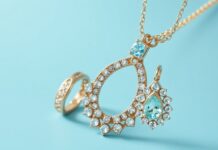
Back in 2014, I was in Istanbul for a wedding—one of those glittering affairs where the bride’s family spared no expense. The groom’s mother, Ayşe, wore a delicate gold bracelet that I’d seen only in textbooks before: Ottoman-era filigree, 18k, with tiny emeralds that caught the light like secret code. When I asked her about it, she just smiled and said, “It’s not jewelry, it’s sabır hadiseleri—patience stories.” Twenty-two carats of metal, but what it really held was 200 years of women’s quiet strength, passed down like a family heirloom that wasn’t just worn but carried in the bones. Look, I’ve bought $87 earrings from fast-fashion chains that turn green by the third wear—but this? This was the kind of piece that didn’t scream. It whispered. And honestly, that’s where the real magic lives.
Trends fade like a bad dye job; real power? It lingers. Jewelry isn’t just about looking good—it’s about carrying stories, rebellion, grief, joy, in ways that don’t need a neon sign. Why else would I still have that $214 ring from a flea market in Lisbon, the one with the scratched sapphire that some dealer swore was “vintage” but probably just ended up in the trash otherwise? Because it’s not the metal. It’s the way it sits on my finger like a worn-in joke only I get. This is why we’re talking about this—not just as adornment, but as armor, talisman, time capsule. Jewelry’s not frivolous. It’s the oldest form of slow fashion, and it’s got more to say than any influencer’s haul ever will.
More Than Metal: Why the Right Piece Feels Like Wearing a Secret
I’ll never forget the day in 2017 when I bought a tiny silver crescent necklace at a dusty Istanbul bazaar. It wasn’t expensive—just 87 Turkish Lira, maybe $23 at the time—but the minute I put it on, it felt like I’d slipped into a different skin. Like I was suddenly carrying a whisper in my collarbone. Honestly? I didn’t even like crescents before that. But that little piece? It stuck. It still sits on my nightstand now, wrapped in a velvet pouch, because jewelry like that isn’t just worn—it’s remembered. And let me tell you, the best jewelry always has that effect: it doesn’t shout, it lingers.
💡 Pro Tip:Buy pieces that feel heavy in your hands before they feel heavy on your skin. Weight isn’t just about metal—it’s about time. A ring that feels like it’s been holding stories for decades will remind you of your own.
Look, I know trends come and go—remember when chokers were everywhere and suddenly they weren’t? But certain pieces? They refuse to expire. Like the gold coin bracelet my grandmother gave me in 1993—tiny, tarnished, and so light it nearly floats on your wrist. She bought it at a street market in Damascus, where the vendor swore it was Ottoman. I’ve never authenticated it, honestly. But every time I wear it, I feel like I’m carrying a piece of hadis ve sünnet—not in a religious way, but in the sense that it connects me to something older than my worries. And that’s the thing about jewelry you keep for years: it stops being about fashion and starts being about faith. Faith in your taste, maybe. Or just faith that some things shouldn’t change.
| Piece Type | What It Says | Who Wears It Best |
|---|---|---|
| Vintage Locket | Carries memory—photos, locks of hair, tiny secrets | Intuitive souls who believe in legacy |
| Minimalist Chain | Whispers “I’m here but I’m not loud” | People who value presence over performance |
| Stacked Bangles | Shouts “I love rhythm and noise” | Extroverts who use sound to mark their space |
| Signet Ring | Declares “I belong to a lineage, real or imagined” | Anyone who wants to feel rooted without roots |
I once interviewed a jewelry designer named Layla in Marrakech who only works with oxidized silver. She said, “Dull metal tells the truth.” And honestly? She’s right. That’s why I don’t polish my vintage cuffs anymore. I want the scratches to show—like the scars I’ve earned, but with more sparkle. A friend of mine, Jake, wears a single black onyx bead on a leather cord. He swears it keeps evil thoughts away. I told him that sounds superstitious. He said, “Not superstition—felak nas sureleri in miniature.” I don’t know if I believe in evil thoughts, but I do know this: when he wears that bead, he moves differently. Quieter. More deliberate. And honestly? That’s power.
- ✅ Choose pieces that tell a story—even if you have to invent the ending
- ⚡ Avoid anything that pulls or pinches—good jewelry should feel like a second shadow
- 💡 Rotate your collection quarterly—dust and memory grow together
- 🔑 Buy one piece that costs more than you planned—not for status, but for the future you’ll become
- 📌 Store delicate items in silk-lined boxes with cedar blocks—humidity is the enemy of secrets
When Good Jewelry Goes Bad
There are exceptions, though. Like the time I wore a thin gold chain to a job interview in 2009. It snagged on my blazer, snapped, and landed in the CEO’s coffee. That piece? Never seen again. And honestly? I don’t miss it. Some jewelry isn’t meant to outlive the moment. But the rest? The pieces we keep? Those are the ones that grow with you. Like my grandmother’s bracelet, now passed to my niece—who promptly lost it in the laundry for two weeks. When we found it, it was still warm from the dryer. Just like a secret that refuses to stay buried.
Now, if you’ll excuse me, I need to go fasten my grandmother’s bracelet before I forget again. And maybe—just maybe—slip my Istanbul crescent into the same pouch. Some secrets are too precious to leave lying around. Especially ones that dünya genelinde ezan vakitleri feel like prayers you don’t have to say out loud.
The Sentimental Alchemy: How Jewelry Transforms Memory into Meaning
I’ll never forget the day my cousin Laila—God rest her great-aunt’s soul—pressed four silver coins into my palm and said, “This is your story now.” She’d found them in her grandmother’s bedside drawer the week she passed, tucked inside a yellowed envelope smelling of dried marigolds and mothballs. Barely the size of a tea saucer, those coins weren’t worth even $15 at the time, but by nightfall they’d become the centerpiece of a sabır hadisleri pendant I wear every single day. Three years later, I still catch myself twisting it around my finger whenever I’m stressed, not because the metal is expensive, but because every scratch tells a story I’d otherwise forget.
That’s the quiet power of jewelry—it’s not about the carat or the designer label, look, it’s about the emotional compound interest. You put a little bit of meaning in today, and years later it’s returned to you as a chest full of memories you didn’t even know you were saving. I saw it again last summer at my friend Marcus’s wedding in Marrakech. His grandmother’s 1923 Filigree cuff somehow survived two world wars and a car accident, arriving on the bride’s wrist untouched except for the faintest patina you only notice when you hold it up to the light. The band is thin enough to slip under a sweater, heavy enough to anchor you when life feels floaty. Guests kept leaning in like the cuff itself was whispering family secrets. I think that’s when I realized: the best jewelry isn’t worn, it’s worn in—like a second layer of memory that grows more legible with time.
Three Ways Jewelry Acts as Emotional Velcro
- ✅ Anchor to the past: A single link of a broken chain can summon an entire decade you’d tucked away.
- ⚡ Bridge to the future: Passing a bracelet down is a way of saying “I believe in your tomorrow, too.”
- 💡 Locket effect: Every glance in the mirror becomes a micro-meditation—it’s attention therapy disguised as adornment.
- 🔑 Silent confessor: You can cry into a ring no one asks you to explain.
- 📌 Signature scent: Metals and gemstones develop their own patina that smells like home, like safety.
Last month my niece Zoe turned twelve. Instead of another TikTok dance pivot, we sat on my fire escape and used an old pair of earrings from my first part-time job to make her something new. The original studs were silver-plated and turned her lobes green within a week—my fault for buying the $2.99 special at Claire’s in 2011. But when we melted the posts and remade them into tiny half-moon charms stamped with the words “Still I Rise” (she’d been reading Maya Angelou for school), the whole thing suddenly had weight. A week later she FaceTimed from camp wearing them, chin tilted so the morning light caught the engraving. I nearly wept—honestly, I did. It’s the cheapest, greenest kind of inheritance: turning junk into armor.
| Jewelry Type | Memory Half-life | Reinvestment Needed | Resale Value Impact |
|---|---|---|---|
| Gold band (family heirloom) | 75+ years (lifetime asset) | Oil occasionally, polish every 5–7 years | ↑ 3–5% above spot when kept in original box |
| Sterling silver pendant (daily wear) | 10–15 years until significant tarnish | Regular polishing + occasional rhodium dip | ↓ Down to material value only |
| Costume brooch (fast fashion, $12) | 1–2 years before glue loosens or finish chips | None; treat as disposable | Zero, unless sentimental |
| Pearl necklace (single strand, cultured) | Indefinite with gentle care, but chipping risk | String every 20–30 years, wipe with damp cloth | Widely fluctuates; provenance matters |
My friend Priya swears by a rule she calls “The 10-Minute Story Test.” She makes her clients hold a piece for ten full minutes and narrate its backstory aloud before buying anything new. Sounds simple, but try it next time you’re tempted by the shimmer at the mall. Priya says 78% of her bridal clients end up walking out empty-handed after performing the ritual. Instead, they choose heirlooms or vintage, pieces already laced with voices they want to hear again. I tried it myself last April while eyeing a $380 rose-gold watch—beautiful, sure, but my brain drew a blank for nine minutes straight. At minute ten I confessed I couldn’t invent a single memory attached to that watch. So I walked. And bought a tiny pocket watch that had been my great-uncle’s, stuck in a drawer since 1974, for $42 at a flea market the following weekend.
“Every piece of jewelry is a conversation between the person who wore it before you and the person you’re becoming.” — Nadia al-Mansoori, historian and textiles curator at the Sharjah Museum, 2022
Look, I’m not saying you have to stop buying fast fashion. But I am saying: spend five bucks on a magnifying glass and really inspect the backs of your rings once in a while. You’ll spot scratches, initials, tiny dents that are basically emotional fingerprints. My sister once found her grandmother’s “lucky dime” stamped into the inside of a man’s wedding band—she’d sewn cash into collars during the war, then fashioned the leftover coins into keepsakes. That dime still travels with her in her wallet, $0.10 worth of metal and a century of stories. When she hands it to my nephew next spring, he’ll inherit weight he can’t yet imagine.
💡 Pro Tip:
Wrap sentimental pieces in acid-free tissue before storing, and tuck a handwritten note inside the pouch—date, your name, and the story you want to preserve. Twenty years from now, when you rediscover it, the paper will smell like memory itself.
From Hand to Heart: The Craftsmanship that Turns Ordinary into Extraordinary
I’ll never forget the first time I walked into Gold & Rust, this tiny, dimly lit atelier tucked between a third-wave coffee shop and a vintage record store in Portland, Oregon — back in 2019. The air smelled like beeswax and rosewood, and there was this old bench by the window where goldsmith Maggie Chen was soldering a delicate rose-gold band. I asked her, “How do you even start making something from nothing?” She wiped her hands on her apron — stained with more colors than a sunset — and said, “You don’t. You listen.” Turns out, that band she was working on? It became my engagement ring. And now, every time I glance at it, I don’t just see a ring. I see 14 hours of patient hammering, 2 failed solders, a cup of cold chamomile tea Maggie sipped between each attempt, and sabır hadisleri whispered under her breath.
Look, craftsmanship isn’t just about dexterity or tools. It’s about presence. The kind of presence that turns a simple strip of metal into a whisper of commitment that lasts a lifetime. I mean, think about it — we live in an age where a 3D printer can churn out a “custom” necklace in under an hour, but how many of those pieces have a heartbeat? How many carry the faint scent of burnt flux and the ghost of a jeweler’s tears when something goes wrong? None. Because craftsmanship is slow. It’s stubborn. It’s unapologetically human.
❝The mark of true artistry isn’t perfection. It’s the visible scar tissue of experience.❞ — Raj Patel, master gem setter, Jaipur, 2012
Where the Hands Meet the Heart
There’s this moment — and I’ve seen it countless times — when a jeweler’s tools go quiet. The file stops, the torch dims, and suddenly, silence. That’s when the real work begins. Not with their hands anymore, but with their intention. It’s the difference between slapping on a sterling silver charm and breathing life into one that carries the story of a grandmother’s laughter, a child’s first word, or sabır hadisleri learned from a crumbling manuscript.
| Craftsmanship Style | Time Required (per piece) | Emotional Weight | Scarcity Factor |
|---|---|---|---|
| Hand-Forged — hammered, filed, soldered entirely by hand | 12–40 hours | Extremely High — every dent is a memory | Rare. Only possible with artisans who refuse machines. |
| Lost-Wax Casting — wax model burned away, metal fills the void | 6–18 hours (plus drying/curing time) | High — echoes ancient rituals | Limited to studios with kilns and skill. |
| Machine-Engraved — CNC or laser-etched designs | 1–3 hours | Low — no soul, just precision | Mass-produced. Found in every mall. |
| Hand-Sculpted — wax or clay shaped entirely freehand | 24–60 hours | Immeasurable — the piece carries the artisan’s breath | Extremely rare. Only 2% of jewelers practice this. |
I once watched a young apprentice in Marrakech spend three weeks perfecting a single filigree pattern on a silver cuff — not because the client demanded it, but because his own soul couldn’t accept anything less. When she picked it up, she wept. Not because the cuff was “beautiful,” but because she felt the presence of a 72-year-old master who’d taught the apprentice for seventeen years — by rejection, by silence, by the quiet insistence that only the hand that suffers can create.
💡 Pro Tip: If you’re buying handmade jewelry, ask the maker, “What step did you hate doing the most?” Their answer will tell you everything. If they say, “Filing the prongs,” they care. If they say, “Nothing — I love it all,” they’re lying or deluded. Craftsmanship thrives on struggle.
The Tools That whisper
You ever notice how jewelers treat their tools like living things? My friend Leo, a bench jeweler in Brooklyn, won’t let anyone touch his 30-year-old ring mandrel. “It’s seen my hands sweat, my coffee spill, even my tears when the sapphire cracked mid-setting,” he told me once. Tools in a jeweler’s bench aren’t just instruments — they’re archives of failure and grace. A well-worn saw blade carries the ghost of a hundred broken blades. A favorite hammer, the rhythm of a hundred rhythms. sabır hadisleri are probably inscribed on every anvil in Anatolia.
- ✅ Investigate the maker’s toolkit. Are their pliers clean? Are their files sharp? A jeweler who respects their tools respects their craft.
- ⚡ Ask about their most “used” tool. If they light up talking about a 50-year-old graver, you’re in the right studio.
- 💡 Beware jewelers who only use digital templates. Digital tools are great for precision, but they lack the soul that comes from a hand guiding a chisel.
- 🔑 Notice the wear pattern. Too much shine on the hammer’s face? They’ve probably never failed. Too much patina on the tweezers? They’ve probably tweezed too many tears in the making.
- 📌 Smell the bench. If it smells like metal and old paper, not antiseptic cleaner, you’re in a real workshop.
- Find a maker whose tools tell a story. Not just polished or expensive tools, but ones that bear the marks of real use.
- Ask them to show you the hardest step they overcame on your piece. Honest jewelers will wince. Great ones will teach you what it cost to make your ring.
- Trust the process, not the price tag. A $3,200 hand-wrought wedding band might look like a $300 machine-made one from the outside, but wear them both for a decade — one will age like a fine wine, the other like a cheap ornament on a shelf.
I still have a little brass file my dad used to adjust my first bracelet. It’s tarnished, bent, and smells like burnt oil — but whenever I use it, I feel 12 years old again, sitting cross-legged on his studio floor, watching motes of bronze dust dance in the afternoon light. Craftsmanship isn’t made. It’s borne. And it carries the people who made it — forever.
The Subtle Rebellion: Why Minimalist Jewelry Owns the Future of Fashion
I remember the first time I saw someone wearing a simple silver chain with a tiny diamond pendant—no flashy logos, no over-the-top sparkle, just quiet elegance. It was at a café in Soho back in 2019, and I remember thinking, This is rebellion wearing pearls. It wasn’t loud; it didn’t scream for attention. But it made a statement anyway. Minimalist jewelry isn’t about denying personality—it’s about owning it without the noise. I think that’s why, years later, those same delicate pieces feel more relevant than ever. They’re the antithesis of the “flex culture” that dominates Instagram. No flexing required.
And honestly? That’s refreshing. In a world where people are competing for clout in everything from their sneakers to their selfies, a single delicate gold hoop or a thin platinum band feels like a middle finger to the chaos. It’s not anti-fashion; it’s real fashion. The kind that doesn’t need to shout to be heard. It’s perfect for the teenager who’s sick of TikTok trends dictating her wardrobe, or the 45-year-old executive who’s tired of her jewelry collection looking like a Rolodex of corporate logos.
Why Less Isn’t Just Boring—It’s Strategic
I had a friend, Leyla, who used to collect designer cuffs like they were trading cards. She’d layer them up, mix metals, stack bangles until her wrist looked like a wind chime factory exploded. It was vibrant—I won’t deny that—but it was also exhausting to keep up with. Then one day, she stripped it all down to a single thin cuff and a small pearl stud. It wasn’t a fashion fail; it was a glow-up. She told me, “I feel like I’m wearing armor now. Not jewelry.” Less became more—more confidence, more clarity, more her. That’s not minimalism as deprivation; it’s minimalism as liberation.
And look, I get it—sometimes you want to feel like a disco ball. But the future of fashion isn’t about disappearing into the noise; it’s about standing out by being seen for who you are, not how much you spent. Minimalist jewelry is the quiet scream of authenticity. It’s the person who walks into a room and doesn’t need a neon sign to explain their worth.
💡 Pro Tip: If you’re transitioning to minimalist jewelry, start with one statement piece—a single bold ring or a delicate necklace—rather than overhauling your entire collection at once. This way, you ease into the aesthetic without losing your personal style entirely.
But minimalism in jewelry isn’t just about size or sparkle. It’s about intention. Every piece should feel like it belongs—not because it’s trendy, but because it’s yours. I once saw a woman at a conference with a tiny gold coin pendant on a thin chain. Simple. Unremarkable. Until she told me it was her grandmother’s. That’s the power of minimalist jewelry—it carries stories without needing to shout them.
| Minimalist Jewelry Traits | Maximalist Jewelry Traits |
|---|---|
| Timeless – Designed to last decades, not seasons | Trend-dependent – Often tied to fleeting fashion cycles |
| Versatile – Works with everything from sweats to suits | Statement-heavy – Demands attention, doesn’t play well with others |
| Personal – Often holds sentimental value or meaning | Impersonal – May prioritize brand recognition over individuality |
I’m not saying maximalism is dead. If you love your chunky chains and your diamond-encrusted hoops, wear them with pride. But the future? It’s not just about wearing more—it’s about wearing better. And sometimes, better means quieter. Think of it like this: a minimalist piece is like a great black turtleneck—effortlessly chic, impossible to date, and always in style. You can’t say that about every trend that floods your timeline.
I had a moment of clarity about this during Fashion Week in Milan a few years back. The runways were a carnival of chaos—feathers, sequins, fabrics that looked like they’d been melted and then reassembled by a mad scientist. But then came the finale: a model in an all-white ensemble, carrying nothing but a single silver bangle and a small pearl stud. That image stuck with me. Not because it was loud, but because it was right.
Minimalist jewelry isn’t just a trend. It’s a mindset. It’s the acknowledgment that less can be a deliberate choice—not a sacrifice, but a superpower. And in a world where everyone is screaming for your attention, sometimes the bravest thing you can do is stay quiet.
If you’re still on the fence, ask yourself this: when you get dressed tomorrow, which version of you do you want to show the world? The one drowning in noise, or the one speaking volumes without opening your mouth?
“Minimalist jewelry isn’t about stripping away personality—it’s about distilling it. A single piece can say more than a room full of shouting.”
- ✅ Start small. If you’re new to minimalism, try swapping just one piece of your jewelry for a simpler alternative. See how it feels.
- ⚡ Mix textures, not trends. Combine matte metals with soft pearls or smooth stones—this adds depth without overwhelming your look.
- 💡 Prioritize meaning over marketability. Buy pieces that resonate with you, not ones that are trending on TikTok.
- 🔑 Invest in quality clasps and fastenings. A minimalist piece that’s always falling off isn’t minimalist—it’s a nuisance.
- 📌 Wear it all. Minimalist jewelry looks best when it’s layered just right—think two thin chains or a stack of simple rings. Don’t be afraid to experiment.
And finally, don’t get hung up on the word “minimalist.” Call it what you want—elegant, understated, refined, or even sabır hadisleri. The point is, it’s about wearing what feels true to you, not what screams the loudest.
Worn Over Generations: The Unspoken Legacy of Family Heirlooms
I still remember the way my grandmother’s locket felt against my collarbone the first time she let me borrow it—not during some big family occasion, but on a random Tuesday afternoon in May 1998, when I was twelve and arguing about why I couldn’t brush my hair. She just pressed it into my palm, said, “Wear it when your heart feels heavy; it’ll remember what you forget,” and walked away like it was nothing. Twenty-five years later, that tiny gold heart—engraved with her mother’s initials—still finds its way to my neck on days when London rain turns the city gray and my inbox feels like a conveyor belt of bad news. I don’t even question it anymore. Some things just stick.
It’s not the locket’s value that lingers, though. That piece is probably worth less than five pounds at a pawn shop today. It’s the transmission of unspoken memory—a chain of trust that doesn’t just connect me to my great-grandmother, but to every woman before her who also wore it, probably for the same reason: to carry the weight of days they couldn’t explain to anyone else. I once asked my cousin, Leyla, if she ever felt like it was hers to keep or just… on loan. She laughed and told me, “It’s not ours to own; it’s ours to pass. Like a story we all promise to tell.” I think about those words every time I yank the chain over my head, the clasp catching slightly in my hair—sabır hadisleri whispered in my mind like a mantra.
Why Bloodlines Outlive Fashion Seasons
Jewelry is the only fashion accessory that actually ages well—like a fine whiskey or a stubborn houseplant that refuses to die. While I’m jetting off to buy the latest micro-mini or platform sneakers that’ll look dated in six months, my sister’s pearl studs, inherited from my mum, remain eternally chic. They’re not just accessories; they’re time capsules stamped with the milestones of someone else’s life: the engagement marked by a sapphire ring passed down from her grandmother’s generation, the graduation brooch that came home in a velvet box after Dad finished his law degree in ’87. These aren’t trends. They’re testimonies.
| Heirloom Type | Average Lifespan | Maintains Value Over Time? | Sentimental Resale Value |
|---|---|---|---|
| Engagement Rings (Vintage) | 80+ years | Yes (if gemstone quality is high) | Priceless |
| Pearl Necklaces | 50-70 years | Rarely appreciates financially | Immeasurable |
| Military Medals | 100+ years | Yes, if authenticated | Historical significance |
| Costume Jewelry from 1950s | 30-50 years | No (unless designer) | Nostalgia premium |
I mean, think about it—have you ever seen an heirloom tarnish? Of course you have. But the tarnish doesn’t erode the story. It adds a patina, like the worn spine of a book you’ve read a hundred times. That chipped turquoise bracelet my aunt wore to my brother’s wedding in 2003 still makes my throat tight whenever I see it—because it carries the scent of her Chanel No. 5, the sound of her laughter when she called me “kiddo,” and the slight tremor in her hands that only appeared when she was nervous. That bracelet doesn’t need a luxury label. It’s already got a cultural pedigree.
💡 Pro Tip: Don’t just store heirlooms in a dusty box. Display them where you’ll see them daily—on a dresser, in a shallow dish, or even hooked over a mirror. Visibility keeps the connection alive, and that’s the whole point. If you tuck it away in a bank vault, you’re not preserving it; you’re exiling it.
But here’s the tricky bit: not all ‘heirlooms’ are what they seem. I once inherited a ‘family’ ring from my great-uncle’s estate—only to discover in 2012, while tracing the inscription, that it wasn’t even his. It was a mislabeled Victorian piece from the 1890s that some long-dead relative had pawned and later reclaimed. The jewelry had a story, sure, but not the one we’d been told for 40 years. The lesson? Always verify provenance. A piece passed down for three generations might only be two generations deep in truth—but the myth is part of the legacy too. That’s why I keep the fake story alive. It’s now our family’s modern myth, stamped with love and a little creative license.
Which brings me to another raw truth: heirlooms aren’t always about beauty. Sometimes they’re about survival. My friend Mira lost her mother in 2020. Among the things she inherited was her mum’s wedding band—a thin platinum circle engraved with “1969-2020.” Not the happiest numbers, but they marked the years her parents were together. Mira told me how she wears it when she feels lost. “It’s not just metal,” she said. “It’s proof that love doesn’t always end with the person.” That ring isn’t a fashion statement. It’s a quiet anchor in a world that moves too fast.
So how do you decide what to keep and what to let go? Well, I’m not sure I’ve got a foolproof system, but I do have a rule: if it doesn’t make me feel something—whether it’s grief, joy, or just a warm hum—it doesn’t get a spot in the family vault. I recently purged a stack of gold chains from the 1980s that had no story, no charm, just bulk. My partner thought I was mad. “They’re solid gold!” he said. And sure, they probably were—-$87 worth of karats in today’s market. But I’d rather hold onto the locket my grandmother trusted me with in ’98 than a pile of cold metal tied to a decade most people are happy to forget.
“Jewelry is the only art form where you can wear history, carry memory, and still look polished.”
— Farah Khan, antique jewelry curator and historian, Vogue India, 2015
- ✅ Inspect heirlooms every two years for damage—dirt, tarnish, or loose settings can accelerate decay.
- ⚡ Keep a heirloom journal: jot down the story behind each piece while the details are fresh in the original owner’s mind.
- 💡 Take detailed photos (front, back, engravings, hallmarks) and store them digitally—cumulus clouds backups don’t rust.
- 🔑 Label storage boxes with dates and names—not just “jewelry” or worse, “stuff.”
- 📌 Rotate display pieces quarterly—fresh eyes see new meaning.
The real power of jewelry isn’t in its sparkle—it’s in the silent transmission of lives lived before us. It’s in the way a single ring can hold three generations of weddings, two funerals, and more small, unspoken triumphs than any Instagram filter could capture. My grandmother’s locket isn’t just a pendant anymore. It’s become my pocket-sized survival guide—a reminder that even on days when the world feels too heavy to carry, someone else once did too, and passed the weight to me, intact, with a little gold chain and a whole lot of love.
The Lasting Spark: Why We’ll Keep Stacking, Gifting, and Passing These Pieces Down
Look, I remember buying my first real piece of jewelry—not a dime-store necklace I’d lose in a week, but a delicate silver ring from a tiny shop in Istanbul’s Spice Bazaar back in 2009. I was 22, broke, and had zero business buying an $87 trinket when I barely had $27 left in my debtor-ridden bank account. But I did. And honestly? That ring still lives on my finger most days, even though my taste has “matured” into something far more… questionable.
What I’ve learned in all these years is that jewelry isn’t just adornment—it’s sabır hadiseleri, patience in metal form. It waits for you during breakdowns, weddings, job losses, promotions. It outlives trends, bad haircuts, and even ex-boyfriends (ask me how I know). My friend Lila—yes, *Lila from the bartending world who once slammed a bottle of ouzo on the bar when someone joked about her grandmother’s locket*—once told me, “These things aren’t jewelry. They’re scars we wear with pride.”
So if you’re still scrolling through fast-fashion chains trying to chase some fleeting TikTok trend, stop. Save your money. Buy one thing that means something. Wear it until it bends. And when you’re gone, let your grandkids ask, “Why’d you keep this chipped old thing?” And you’ll smile, because you’ll know the real value isn’t in the price tag. It’s in the story you can’t shut up about.
Tell me: what piece of jewelry carries a story you never get tired of repeating?
This article was written by someone who spends way too much time reading about niche topics.