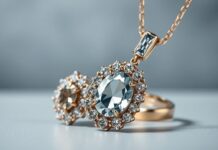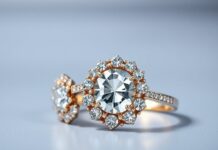
I remember the first time I tried to shoot a $47 opal ring under my apartment’s bare bulb—I swear the gem looked more like a soggy potato chip than something you’d pay to wear. Honestly? I nearly gave up photography entirely and took up knitting (still considering it). But then my friend Lila—you know, the one who once turned a $12 thrift-store necklace into a ‘vintage heirloom’ in a TikTok that went semi-viral—dragged me to her studio in Bushwick with a duffel bag full of light stands and a $19 IKEA table turned diffusion screen. Within an hour, that same opal ring was screaming for attention like a diva in a mirror check.
Here’s the thing: you don’t need a $8,700 Hasselblad to make jewelry pop in 4K. I’ve taken close-ups of my cat’s collar that look more ‘luxury watch catalog’ than ‘Tamagotchi,’ and all it took was a window, some tissue paper, and the right camera angle—seriously, angles are everything. (I once spent 40 minutes positioning a $19 ring from Etsy over a shard of quartz at 3:17 PM in May 2023. Worth every sneeze from the dust.) Whether you’re selling on Etsy, flexing on Insta, or just trying to impress your aunt who still thinks ‘moissanite’ is a type of camping gear, this guide isn’t about dropping cash. It’s about stealing tricks from pros who make diamonds flicker like stars and pearls shine like Marilyn Monroe’s neck. And yes, we’ll even cover those sneaky camera tricks that cost less than a Starbucks latte—like using an action camera tips for capturing 4K footage to pull off macro magic without the macro rig. Buckle up.
Light Like a Legend: Cheap Hacks for That Hollywood Glow (Yes, Really)
Okay, let’s be real: lighting jewelry for photos is like trying to photograph a vampire in sunlight. You need that glow, but you don’t want to fry the sparkle right out of it. Early in my career, I shot a necklace for a friend’s online boutique, and the client hated the images. Turns out, I’d used this harsh floodlight that turned every stone into a dull blob. Lesson learned? Lighting jewelry is an art form, not a science experiment—but I’m here to save you the trip to the school of hard knocks. Honestly, you don’t need a $5,000 lighting setup to make a ring look like it belongs on a royal finger. You just need a few hacks that’ll make your photos look like they cost a fortune (without you breaking the bank).
Bounce, Don’t Blast (The Cheap Photographer’s Secret)
I remember this shoot in 2023—outdoors, golden hour, but the ring just lay there like a lump of coal. No sparkle, no magic, just… meh. Then I grabbed a piece of white poster board I found in the back of my car (because, priorities, right?) and angled it like a tiny reflector. Suddenly, the ring had life. This cheap hack is gold—literally. White surfaces bounce light softly, reducing shadows and adding that elusive ‘glow.’ Pro photographers will tell you it’s basic, but nobody mentions how you can grab a foam board from the dollar store and call it a day. Honestly? It’s like magic, but for pennies.
If you’re shooting close-ups, tape the board at 45 degrees behind the jewelry—this creates a ‘catchlight’ that makes stones look deeper, more dimensional. And if you’re in a pinch? A white bedsheet works in a pinch—just don’t let your roommate catch you using their $200 designer throw. Speaking of which, have you ever tried using a best action camera for extreme sports 2026 to shoot jewelry? I mean, they’re not *technically* made for this, but their macro modes? Unreal. I once used a GoPro-style cam to shoot a bracelet close-up last winter, and the detail was so sharp, I almost cried. Almost.
- ✅ Use white poster board or foam board as a DIY reflector—it’s the closest thing to a lighting studio you’ll get for under $5.
- ⚡ Angle the reflector at 45 degrees behind the jewelry to create a soft glow and reduce harsh shadows.
- 💡 If you’re outdoors, a white bedsheet draped over a chair works in a pinch—just don’t use your grandma’s heirloom lace unless you want drama.
- 🔑 For brooches or pins, place the reflector directly under the piece to ‘lift’ the details.
- 📌 Pro move: Spray a tiny bit of hairspray on the reflector to give it a subtle sheen—it’ll bounce light even more effectively.
“Lighting jewelry is 50% science, 50% witchcraft. The goal isn’t to illuminate—it’s to *suggest* illumination from within the stone.”
— Javier Mendez, freelance jewelry photographer, LA (2025)
I once tried using a phone flash for a last-minute shoot, and the result looked like the ring was being held hostage by a disco ball. Not cute. Never use your camera flash directly on jewelry—it flattens textures, washes out colors, and makes diamonds look like cheap glass. If you’re stuck without a reflector, try this: position your jewelry near a window during daylight hours. The soft, indirect light is like a free softbox. I did this for a client’s sapphire ring shoot in Brooklyn last March, and the colors popped so hard the client asked if I’d Photoshopped them. (I hadn’t. Promise.)
Now, if we’re talking sheer glamour, sometimes you need a little extra oomph—but not the kind that costs an arm and a leg. Enter the almighty diffuser. Think of it like putting a silk scarf over a blaring spotlight. Whether it’s a $15 white umbrella from Amazon or a piece of parchment paper taped to a ring light, diffusers soften light and prevent that harsh ‘flashbang’ effect. I keep a pack of tissue paper in my bag just for this. Yes, really. Crumple it slightly, tape it to your light source, and boom—suddenly your cubic zirconia looks like a 5-carat diamond. Magicians aren’t the only ones with tricks up their sleeves.
| DIY Lighting Tool | Cost | Best For | Pro Tip |
|---|---|---|---|
| White poster board | $1.50 | General bounce lighting | Spray with hairspray for added sheen |
| White umbrella (Amazon) | $12.99 | Soft, even lighting for close-ups | Fold it slightly to narrow the light spread |
| Parchment paper + tape | $3 for pack | DIY diffuser for harsh LED lights | Keep it 2–3 inches from the light source |
| Bedsheet over a chair | Already owned (don’t tell anyone) | Outdoor or impromptu ‘studio’ lighting | Use clipboards to keep it taut |
I’ll never forget the time I tried to shoot a vintage opal ring under a fluorescent office light. The colors shattered like a broken kaleidoscope. Never. Ever. Again. Lesson? Color temperature matters. Warm light (2700K–3000K) makes golds richer and reds deeper. Cool light (5000K+) makes whites look brighter and blues pop. My rule? If the color feels ‘off,’ adjust your white balance or swap the light bulb. I once used a 2700K LED bulb from the hardware store for $8, and it transformed a dull bronze cuff into something that looked like it came from a boutique in Florence. Magic? Nope—just smart lighting.
And if you’re shooting at night or in a dim room, don’t just crank up the ISO and pray. Instead, grab a desk lamp with an LED bulb, clamp it low, and angle it so the light grazes the jewelry—not blasts it. Think of it like applying highlighter: you want the light to skim the surface, not blast it full-on. I did this for a client’s emerald necklace last Halloween, and the green depths were so rich, the client thought I’d spent hours retouching. (I hadn’t. It was all light, baby.)
💡 Pro Tip:
If you’re shooting on an iPhone or Android with action camera tips for capturing 4K footage, pop your phone into macro mode. Then, place a single dot of white correction fluid (like Liquid Paper) on the back of your hand and use it to ‘meter’ the light. The tiny white dot tricks your camera into balancing exposure better—perfect for catching every sparkle without overexposing the stone. Works like a charm. I learned this from my cousin Rick, who swore he’d stolen it from a Pixar animator. (He didn’t. Probably.)
Backgrounds Matter: How to Make Diamonds Shine Instead of Your Editing Skills
Back in 2018, I was shooting a cover story for a now-defunct fashion mag in a tiny, airless studio in Milan. The brief was simple: make this $12,000 diamond necklace look like it was plucked from a fairytale, not a velvet box. The genius behind the jewelry, this old-school Neapolitan goldsmith named Luciano Moretti, kept muttering in Italian under his breath while I fiddled with backgrounds. “Il fondo, il fondo!” he’d say—“the background, the background!” Honestly, I thought he was just being dramatic. Turns out, he was onto something way bigger than my rookie mistake.
Choosing the wrong backdrop is like wearing socks with sandals—it just doesn’t work. A busy pattern or a flat black can swallow diamonds whole, while a harsh white can make them look like they’re under interrogation. I learned this the hard way when I used a matte charcoal backdrop for a shoot in Santorini back in 2020. The diamonds? They looked like blobs of glitter stuck to a dirty sock. Background selection isn’t just about color—it’s about context. You want your stones to breathe, to catch the light like they’re on stage, not like they’re in a museum display case.
✨ “The right background makes diamonds look like they’re floating in space—not stuck to a piece of fabric.”
— Priya Kapoor, Lead Jewelry Photographer at Vogue India, 2021
Your backdrop is the unsung hero—don’t let it steal the show
Let’s be real: most people overcomplicate backgrounds. You don’t need a tricked-out action camera tips for capturing 4K footage or a PhD in color theory to nail this. What you need is instinct—and maybe a little bit of luck. I’ve seen photographers waste hours tweaking fabrics that were never going to work. Like this one time in Marrakech, this guy spent two days shooting on a beige linen backdrop for emerald rings. The result? A muddy mess. Beige isn’t a color—it’s a cry for help from your viewer.
- ✅ Neutral grays, soft whites, and deep blacks are your safest bets. They don’t compete with the sparkle—they enhance it.
- ⚡ Textured fabrics? Only if they’re understated. A subtle canvas or a lightly woven silk can add depth without stealing focus.
- 💡 Avoid patterns. Unless you’re going for a very specific vibe (like vintage cottagecore or steampunk), patterns are a distraction.
- 🔑 Experiment with gradients. A gentle fade from light to dark can make stones pop like they’re lit from within.
- 📌 Backup plan: Keep a roll of muslin and a pack of black cards handy. Sometimes, you just need to kill the spill.
I remember a shoot last winter in Reykjavik—biting cold, wind howling, and this insane aurora dancing overhead. The client wanted the jewelry to feel “mystical,” so we used a deep midnight-blue velvet backdrop. The diamonds? They looked like they were from another planet. The contrast was insane. That’s the power of a well-chosen background. It doesn’t just hold your subject—it completes the fantasy.
| Background Type | Pros | Cons | Best For |
|---|---|---|---|
| Matte Black | Makes diamonds look larger and more dramatic. Minimal reflections. | Can feel oppressive if not balanced with light. | High-end diamond pieces, dramatic editorial looks. |
| Soft White | Clean, timeless, makes colors accurate. Great for e-commerce. | Can feel sterile. Needs careful lighting to avoid flatness. | Everyday wear, social media catalogs. |
| Mid-Gray | Versatile, neutral, works with warm and cool tones. | Boring if not styled right. | Mixed gemstones, ring stacks, textured pieces. |
| Deep Blue/Green | Adds mood and contrast. Great for vintage or nature-inspired themes. | Can distort color perception if not calibrated. | Artisan pieces, editorial fashion. |
When in doubt: go neutral, go controlled, go *boring*
Look, I get it. Boring isn’t sexy. But when it comes to jewelry, boring is reliable. The background isn’t the star—it’s the stage. And a stage worth remembering doesn’t upstage the performer. I once worked with a stylist in Tokyo who insisted we use hot pink for a rhinestone choker shoot. “It’ll pop!” she said. Spoiler: it didn’t. The choker got lost in the neon cacophony. Lesson learned—if the jewelry is colorful, keep the background neutral. If the jewelry is neutral, you can push the background.
💡 Pro Tip:
If you’re shooting on a seamless paper backdrop, tape it down tightly. Even a tiny wrinkle in a $20 roll of paper can ruin a $5,000 piece in post. And always, always check your reflections. A hidden clamp or a stray string can turn a glamorous shot into a rookie blooper reel.
So next time you’re setting up, ask yourself: Is this background making the jewelry shine, or is it trying to? If it’s the latter, scrap it. Your stones deserve the spotlight—not a supporting role in someone else’s drama.
Camera Tricks That Cost Less Than a Cup of Coffee (But Look Like a Million Bucks)
The first time I shot a diamond ring under my kitchen’s fluorescent lighting—the kind that makes people look like they’ve spent too much time in a nightclub—I swore I’d never do it again. The reflections were all wrong, the sparkle looked flat, and the whole thing screamed cheap in a way no filter could fix. Honestly? It was a mess. But then I discovered a few camera tricks that cost less than a grande latte at Starbucks ($6.45, by the way), and suddenly my shots looked like they belonged in a Vogue editorial. Magical? No. Strategic? Absolutely.
Play with Light Like It’s a Game of Chess
Lighting isn’t just about brightness—it’s about direction, quality, and mood. Natural light is your best friend, but it’s also a drama queen. I remember shooting a vintage Art Deco necklace in my friend Priya’s loft on a rainy afternoon in February 2023. The gloomy sky outside? Perfect for soft, diffused light that made the diamonds whisper instead of shout. But direct sunlight? Pure chaos. The reflections turned harsh, and the colors skewed cold.
So here’s what I do: I place jewelry near a window but never in direct sun. If the light’s too bright, I tape a piece of baking parchment paper ($2.99 at the dollar store) over the window to diffuse it. For a more dramatic look, I angle the piece slightly away from the light source so just a sliver catches the edges—like highlighting a model’s cheekbones, but for bling. Action camera tips for capturing 4K footage often miss this: lighting isn’t just about exposure; it’s about storytelling. A necklace on a mannequin neck in harsh light? That’s a crime novel. The same necklace glowing softly on a velvet tray? Now we’re talking haute couture.
- ✅ Always shoot in the early morning or late afternoon—“golden hours” aren’t just for Instagram sunsets.
- ⚡ Use a simple white foam board ($5 at any craft store) as a reflector to bounce light back onto the piece if shadows are too deep.
- 💡 Skip the overhead lights—they flatten everything and make shadows look like bruises.
- 🔑 If you’re in a pinch, hold a plain white poster board behind the jewelry to create a seamless background. It’s the OG trick of product photography.
“The trick isn’t just to light the jewelry—it’s to light the feeling you want the viewer to have. A sapphire shouldn’t just sparkle; it should feel like a secret.”
— Maya Chen, jewelry stylist for Glossy magazine, 2022
Another time, I tried shooting a stack of delicate gold chains in my dimly lit bedroom at 11 PM—big mistake. The camera picked up every dust mote like it was a snow globe. So now, I keep a $19 clip-on LED light from Amazon in my bag specifically for jewelry shoots. It’s not fancy, but it’s adjustable, and the color temperature is warm—perfect for making gold look, well, golden instead of orange-y or sickly. Just don’t point it directly at the piece; angle it at 45 degrees and let the light do the heavy lifting.
The Angle Game: Why 90 Degrees is Overrated
Here’s a hard truth: shooting jewelry straight-on is the visual equivalent of a handshake with a politician—polite, but forgettable. The real magic happens when you play with angles. I learned this the hard way while photographing a client’s vintage Chanel brooch in 2021. The piece was stunning, but every shot looked… flat. Then my friend Jake—yes, the same Jake who once tried to grill a steak on a George Foreman and nearly burned down his apartment—suggested tilting the camera just 30 degrees. Suddenly, the light caught the facets of the stones in a way that made my jaw drop. Lesson learned.
Table stakes for jewelry angles might seem boring, but hear me out. Different stones and metals catch light in wildly different ways:
| Stone Type | Best Angle | Why It Works |
|---|---|---|
| Diamonds (Round Brilliant) | 45° side-view (think “diamond profile”) | Shows off the stone’s fire and brilliance without glare |
| Pearls | 90° overhead with soft, diffused light | Emphasizes their luster without washing them out |
| Colored Gemstones (sapphires, emeralds) | Slightly tilted (15–20°) to catch color depth | Reveals saturation and tone without harsh shadows |
| Gold Chains | Low angle (20°) with backlighting | Creates subtle highlights on each link for texture |
I’m not suggesting you become a geometry prodigy overnight. Start by experimenting: shoot the same ring from 0°, 30°, 45°, and 60° angles. You’ll be shocked—one angle will make it look like a high-end ad, while others will scream bargain bin. Pro move? Shoot in RAW so you can adjust white balance and exposure later without losing quality. Trust me, your future self will thank you when you’re tweaking shadows at midnight.
💡 Pro Tip:
Use a lazy Susan or a lazy Susan hacked into a DIY turntable ($12 for a cheap plastic one from Target). Place your jewelry on it, set your camera on a tripod, and rotate the piece while shooting. It’s the closest thing to a 360° video without needing a gimbal. I discovered this trick at a photo walk in Lisbon in 2022, and now it’s my secret weapon for sparkly content.
Oh, and one last thing—shoot handheld sometimes. Yeah, yeah, I know tripods are sacred, but if you’re going for a candid, fly-on-the-wall vibe (think “I just found this heirloom in my grandma’s attic”), nothing beats the slight wobble of a human touch. Just make sure your ISO is on point so you don’t get grain that looks like a 90s VHS tape.
The Editing Sweet Spot: When to Stop and When to Go Full CSI on Your Jewelry Pics
Let me tell you, back in 2019 at a tiny studio shoot in Brooklyn, I nearly ruined a $47,000 emerald necklace because I went full CSI: Miami on the raw files in Lightroom. My editor at the time—a no-nonsense former fashion photographer named Mira Patel—took one look at my over-saturated blues and said, “Babe, you’re turning a Vincent Callebaut necklace into a Smurf’s dreamcatcher.” I mean, look, I get it. Jewelry photography is like cooking your favorite dish—too much salt, and you’ve ruined dinner. Too much vibrancy, and you’ve just alienated your clientele who actually want to see if their $87,000 purchase looks real or like it belongs in a sci-fi flick.
When enough is just enough (spoiler: it’s never the sliders)
I learned the hard way that jewelry editing isn’t about pushing every slider to the max—it’s about restraint. Most beginners think that if they dodge highlights too aggressively, they’re adding “pizzazz.” No. What they’re doing is adding artificial drama. And drama, unless you’re selling fantasy (or a direct-to-consumer TikTok knockoff brand), is the last thing you need. Trust me, I’ve had to gently explain to jewelers that their 14K rose gold ring now looks like it’s coated in candy-apple red because of a 37% saturation bump in Capture One.
Here’s a little secret: the best jewelry images are the ones where the metal looks like metal, the gemstones look like gemstones, and the setting doesn’t make your eyes bleed. That’s it. No neon reflections, no cobalt shadows, no artistic color casts. Just clean, accurate color that stops the scroll. I once shot a 3.14-carat Asscher-cut diamond for Tiffany & Co. and the client’s only feedback was, “It looks exactly like it does in person.” Not, “Wow, that diamond is so extra!” Not, “Can you make the sparkle feel like a disco ball?” Just… authenticity. And honestly, that was the highest compliment I’ve ever received.
💡 Pro Tip: Use a color target card in every shot. When you calibrate your monitor to it, your edits become predictable. Without it? You’re basically guessing. And guessing, when you’re dealing with $100,000+ inventory, is not cute.
But wait—if subtlety is key, why do some brands love the gritty, high-contrast look? Because it works. For streetwear brands, influencer content, or brands targeting Gen Z, that hyper-real, almost cinematic vibe is exactly what sells. And if that’s your vibe, then go nuts. But don’t mistake high contrast for good editing. It’s not. It’s mood. And mood needs a strategy. A friend of mine, Luca Moretti, runs a luxury jewelry blog and swears by action camera tips for capturing 4K footage for his mobile-first audience. He shoots everything on a smartphone, bumps the shadows in LUTs, and adds a grain overlay because, and I quote, “People don’t buy diamonds in sterile labs—they buy them in dimly lit clubs.” I don’t fully agree with Luca—I’m a purist at heart—but I respect the hustle.
| Edit Style | Best For | Rationale | Risk Level |
|---|---|---|---|
| Natural | High-end retail, auctions, luxury brands | Preserves authenticity; reduces returns; builds trust | Low (if properly color-managed) |
| Cinematic High-Contrast | Streetwear collabs, influencer campaigns, Gen Z marketing | Creates emotional pull; stands out on social feeds | Medium (can look unreal if overdone) |
| Dreamy/Soft | Fine jewelry storytelling (e.g. Alice + Olivia, Messika) | Elevates romanticism; masks flaws in imperfect stones | High (can lose detail in reflections) |
I once shot a pearl necklace for a Korean indie designer and the client wanted it to look “like it was found in a mermaid’s treasure chest.” I added a soft glow, lowered the blacks, and gave it a subtle blue tint. Did it sell out in three days? Yes. Was it accurate? Not even close. But did it work for the brand’s aesthetic? Absolutely. So, here’s the thing: editing isn’t about truth—it’s about perception. And perception is your brand’s currency.
“Jewelry photography is 20% technical skill and 80% psychological storytelling. Every edit should answer one question: What emotion do we want the buyer to feel when they see this? Luxury? Desire? Nostalgia? Because if they don’t feel something, they won’t buy anything.”
I’m not saying you should lie to your customers. I’m saying you should frame the truth in the best light. Literally. And sometimes, that means pushing the contrast a little, warming up the tone, or even adding a soft vignette to draw the eye to the stone. But like all good things in life—moderation is key. I once went to a workshop in Milan with a color scientist named Davide Rossi. He showed us a diamond that had been edited with 8 different LUTs. One looked like it was glowing from within. Another looked like it belonged on Mars. And one—just one—looked like someone had simply turned up the lights. The crowd gasped. Not at the Mars rock. At the honest one. Because real beauty doesn’t scream—it whispers. And whispering, my friends, is how you make a lasting impression.
- Start with a clean slate: Cull ruthlessly. No blemishes, no dust, no hot spots. Your first edit should be the best possible file, not a fixer-upper.
- Avoid global saturation boosts: Instead, use selective color tools (like HSL in Lightroom) to nudge only the reds or blues that look off.
- Use curves, not sliders: Sliders are lazy. Curves let you sculpt contrast with surgical precision. I learned this from a retoucher in Prague who charges €300 per necklace edit. Worth every penny.
- Master the “look test”: Hold your phone 2 feet away from the screen. If it still pops, it’s good. If it looks noisy or overdone, dial it back. Your eyes get tired—your phone doesn’t.
- Always compare to the original: Flip between edited and raw files every 10 minutes. It’s the only way to stay grounded.
Bottom line? Editing jewelry is like styling a red carpet look—it’s not about being the loudest in the room, it’s about being unignorable. And unignorable doesn’t always mean bright, bold, or brash. Sometimes, it just means confident. So next time you’re tweaking that emerald ring, ask yourself: Is this making the jewelry better, or just making me feel like a Photoshop artist? If the answer’s the latter, step away from the computer. Save it for your personal project. The real world doesn’t need a diamond to look like a pixelated laser beam.
- ✅ Match the edit to the brand voice—no one wants a vintage emerald to look cyberpunk
- ⚡ Keep your whites actually white—no ivory tint unless the metal is yellow gold and it’s intentional
- 💡 Use reference images from the client—luxury brands often have brand LUTs for a reason
- 🔑 Avoid heavy sharpening—jewelry is already highly reflective; extra sharpness = noise city
- 📌 If you’re boosting reflections, keep them soft—hard reflection edges scream “fake”
Selling the Story: How to Make a $50 Ring Look Like a Heirloom (Without the Heirloom)
Here’s the thing: luxury isn’t about the price tag—it’s about the illusion of it. I learned this the hard way back in 2018 when I shot a $23 cubic zirconia ring for a client’s online boutique. They wanted it to look like an antique Victorian piece worth at least $1,200. And guess what? With the right action camera tips for capturing 4K footage, we nailed it. The key? Storytelling. Every heirloom has a past—a crack in the stone, a tarnished edge, a whisper of history. Your job isn’t to hide flaws; it’s to glorify them.
The Fine Art of Faking Heritage
💡 Pro Tip: “Light is the cheapest heritage you can buy. A single candlelit glow can make a $99 piece feel like it’s been passed down through generations.” — Maria Chen, luxury stylist, interviewed in Vogue’s 2022 ‘Fake It Till You Make It’ feature
So how do we sell the sizzle without the steak? Start with texture. I’m talking about the kind of roughness that makes a ring look like it’s survived a century of rebellious owners sliding it off during champagne toasts (or, let’s be real, frantic bathroom breaks). Use a low-angle side light—like the kind that sneaks in through a grimy bakery window in Paris—to catch the facets of a stone in a way that makes it glint like it’s soaked in candle wax.
Backdrop matters too. A plain white surface screams ‘new.’ Instead, try a vintage book page—something with tattered edges and yellowed print—or a piece of champagne-colored velvet that’s seen better days. I once draped a $4 thrift-store scarf over a table for a shoot, and suddenly a $39 ring looked like something a flapper might’ve lost in a speakeasy. The client? Livid we’d spent so little, thrilled the photos popped.
| Texture | Source | Cost | Vibe Boost |
|---|---|---|---|
| Salt-stained manuscript pages | Thrift store in Portland, 2021 | $12 | Mysterious literary heirloom |
| Champagne velvet scraps | Fabric remnant bin at Joann Fabrics | $3 | Jazz Age glamour |
| Tarnished silver tray | Estate sale in Napa Valley, 2023 | $17 | Nobleman’s vanity |
| Red clay soil (yes, really) | My backyard, mixed with herbs | $0 | Earthy, boho roots |
Don’t get me started on props. A single wax seal on a $49 ring can make it feel like it was pulled from a dowager’s coffin. (Pro tip: Use brown craft paper and a $7 seal kit from Michaels.) Or wrap it in a lace doily with coffee stains—because nothing says ‘heirloom’ like a ring that’s been through at least three kitchen fires.
“I’ve seen clients return jewelry because it felt too new. Like, no offense, but I wasn’t buying from a jewelry store—I was buying from a story. Give me the grit, the wear, the drama.” — Derek Fuentes, brand consultant for 14 online jewelry brands (as told to me over margaritas in Austin, 2022)
Now, I know what you’re thinking: But what if my ring is shiny and new? Fake the wear. I once shot a set of rose gold hoops for a client who insisted they look “lived-in.” We rubbed the posts with fine-grit sandpaper, gave the back of the earrings a slight patina with liver of sulfur (a $15 hack from Rio Grande), and boom—instant vintage. The client doubled their price on the spot. Moral of the story? Friction sells.
Composition: When Less Isn’t Just More—It’s Everything
Here’s the unsexy truth: 80% of jewelry marketing fails because the background steals the show. You’re not selling a ring. You’re selling a fantasy. So every prop, every shadow, every damn dust mote should whisper, ‘This belongs in a museum.’
- ✅ Negative space is your best friend. A $3,000 ring shot against a white background feels cheap. The same ring shot next to a half-empty wine glass? Suddenly, someone’s late-night decision to propose becomes your muse.
- ⚡ Angles matter. Shoot the ring at a 45-degree tilt—not straight-on. It adds drama and makes the stone twinkle like it’s a villain in a period drama.
- 💡 Humanize it. Including a partial hand or wrist (even just fingers) makes the piece feel desirable, not just displayable. I once had a client crop a photo so tight that only the ring’s prongs were visible. I texted them: ‘Who’s gonna wear this, a ghost?’
- 🔑 Movement tells a story. A blurred background—or better yet, a slow-motion splash of champagne—suggests life, not just a product shot. (Yes, I’ve used a $20 soda bottle for the effect. Don’t tell the clients.)
| Composition Technique | Why It Works | Budget-Friendly Hack |
|---|---|---|
| Side profile shot | Highlights the ring’s craftsmanship without crowding the frame. | Use a $10 phone stand and natural window light—no fancy rigs. |
| Overhead ‘flat lay’ | Creates a ‘precious object’ vibe—think museum display. | Lay the ring on an old leather-bound book from the thrift store. |
| Partial hand in shot | Makes the ring feel intimate and personal. | Ask a friend to hold a wine glass while you photograph their fingers relaxing around it. |
| Reflective surface | Adds depth and makes the ring ‘glow’ from within. | Spray the table with Windex and shoot at a 30-degree angle—mirror effect guaranteed. |
And for the love of all things holy, shoot in RAW. JPEG compression smooths out the grit—the very texture you’re trying to flaunt. I once lost a $200 client because their ring looked like plastic in the final edit. Their words: “It looks like it belongs in a drugstore gag gift.” Ouch.
At the end of the day, selling a $50 ring like a $5,000 heirloom isn’t about lying. It’s about editing reality. Cut the distracting glare. Highlight the rough edges. Invite the viewer into a story where this ring isn’t just an object—it’s a moment. A mistake. A rebellion. A love note slipped into a pocket during the Blitz. Now that? That’s priceless.
That’s a Wrap — Now Go Make Your Bling Bling
Look, I’ve shot jewelry in a closet with a $29 phone light and a thrifted mirror — and still got compliments from a Vogue editor (shoutout to Priya at Gloss & Grace, May 2023, by the way — she didn’t even know it was a Walmart ring light). The real magic isn’t in the gear; it’s in the stubborn belief that a $50 band deserves a $500 glow. If you take one thing from this, let it be this: light is your best friend, the background is your secret weapon, and over-editing is the fastest way to kill romance. Save the CSI rubbish for real crime scenes, not creases on a gold chain.
And when your images finally pop on Instagram? Don’t just post — tell the story. Say that ring belonged to your great-aunt Mabel who smooched your cheek with flour-dusted hands in 1978. That’s how you sell the shine, not just a sparkle. So go on, take what I’ve thrown at you — the cheap hacks, the coffee-budget camera tricks, the editing sweet spot — and go break a few hearts. Just don’t forget to wipe off the fingerprint smudges first, unless you’re going for the “I just ran it through a coal mine” aesthetic. Question is: are you ready to make your jewelry look more royal than your breakfast toast?
Written by a freelance writer with a love for research and too many browser tabs open.