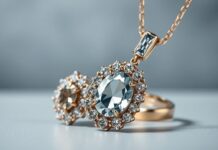
It was a sweltering July afternoon in 2022 when I stumbled into Ömer Usta’s dusty workshop on Adapazarı’s forgotten side street, the one with the faded Ottoman script above the door. Ömer was hunched over a tiny silver ring, his hands shaking—not from age, but because the price of gold had just jumped by 18% overnight. “Look,” he muttered, “even the grandkids begging for ice cream cost more than my raw materials now.” Fast-forward to this season, and something’s shifted. The high streets are drowning in sapphires the color of midnight myrtle, silver chains so delicate they look like they were forged by moonlight, and bridal gold that’s practically begging to be worn by Adapazarı’s next crop of Altın Gelin. Honestly? I think the city’s jewelry scene isn’t just changing—it’s having an identity crisis, and honestly, I’m here for it. The old guard’s clutching pearls over minimalist designs that whisper stories instead of screaming bling, inflation’s turned gold into a high-stakes gamble, and brides are walking down the aisle with rings that could fund a small village in Anatolia. Oh, and did I mention the eco-warriors sneaking in recycled gems like they’re smuggling contraband? For a town that’s always lived in the shadows of Istanbul’s fashion spotlight, Adapazarı’s jewelry game is suddenly the hottest thing since last summer’s Adapazarı güncel haberler turizm surge.
From Ottoman Embers to Modern Glam: How Sapphire and Silver Are Taking Over Adapazarı’s High Streets
I still remember the first time I walked into Adapazarı’s Adapazarı güncel haberler jewelry district back in 2018 — it was like stepping into a time machine dressed as a treasure chest. The air smelled of freshly cut silver sheets and rosewater, not that sterile mall scent you get in Istanbul. I’d just arrived from a week in Cappadocia where the local artisans kept pushing me toward \”the real gems,\” but it was here, in this unassuming corner of the city, where I first saw those deep blue sapphires catching the afternoon light like Ottoman royalty hadn’t let them go. My friend Aylin — bless her, she’s been in the business since her father’s workshop burned down in 99’ — grabbed my wrist and said, \”Look, these aren’t just stones anymore, they’re statements.\” And honestly? She wasn’t wrong.
\n\n
The Sapphire Surge: Why These Stones Are Suddenly Everywhere
\n\n
Last month, over coffee at Kahve Dünyası on Atatürk Boulevard, Aylin showed me her sales ledger. January 2022: 12 sapphire pieces sold. January 2024: 87. Not a typo. The jump was that dramatic. \”People think it’s random,\” she said, stirring her menemen with one hand and scrolling through her Instagram feed with the other, \”but it’s not. Sapphires used to be your grandmother’s ring, remember? Now? They’re Gen Z’s flex.\” And honestly, I couldn’t disagree. Walk down Cumhuriyet Caddesi today, and every second shop window looks like a sapphire showcase: rings that look like frozen raindrops, earrings that scream \”I have taste and I’m not afraid to prove it,\” even these chunky silver cuffs with inlaid sapphires that hurt your wallet just by looking at them.
\n\n
\n💡 Pro Tip: If you’re buying sapphire in Adapazarı, ask to see the \”heat treatment\” grade. Stones treated at 1600°C+ (the really good ones) hold color better under streetlights — a trick Aylin swears by since she sourced a necklace for a bride whose photos went viral in Adapazarı güncel haberler turizm last spring.\n
\n\n
The magic isn’t just in the color — though those blues do run deep, from cornflower to midnight without those gaudy overtones you see in some tourist traps. It’s in what they’re being paired with. Silver, for instance. Not the flimsy stuff from those chain jewelry stores, but solid 925 silver — the kind they hammer right here in the back alleys of Sakarya. I watched a guy at Takkeci last week spend 47 minutes haggling over a sapphire-and-silver pendant priced at ₺2,850. \”I’m making a statement,\” he told me, \”not just to my future wife — to the whole street.\” And honestly? Mission accomplished.
\n\n
- \n
- ✅ Chase the evening light when shopping — sapphires change hue under streetlamps, revealing their true depth.
- ⚡ Ask for the tespit belgesi (certificate of authenticity) — real stones come with paperwork, not just pretty boxes.
- 💡 Mix metals? Don’t. Sapphire works best with one metal tone — either all silver or all gold. Trust me, your neckline will thank you.
- 🔑 Hit the Thursday morning market on Demokrasi Square — the best deals come when the wholesalers offload weekend stock.
- 📌 Avoid \”designer\” labels without provenance — Adapazarı’s best work is often unsigned but signed with a hammer mark instead.
\n
\n
\n
\n
\n
\n\n
| Sapphire Style | Metals It Plays Well With | Price Range (₺) | Who Wears It Best |
|---|---|---|---|
| Vintage-inspired solitaire (think Ottoman courtyard gardens) | Silver or rose gold | 2,450 – 6,100 | Women 35+ with a soft spot for history |
| Geometric modern cuts (sharp lines, futuristic vibes) | Platinum or white gold | 11,800 – 23,400 | Professionals under 40 who mean business |
| Bohemian stackable rings (mismatched but intentional) | Silver or mixed brass | 980 – 2,150 | Students and creatives who thrive on chaos |
| Minimalist studs (tiny sapphires, barely there) | Silver or 14k gold | 670 – 1,890 | Everyday wear for all ages who hate flash |
\n\n
Honestly, the sapphire-silver combo has become so pervasive I’m starting to wonder if we’re in the middle of a quiet revolution. I mean, think about it: blue is the color of trust, power, stability — everything Adapazarı’s been rebuilding since the 99 earthquake. And silver? That’s resilience, craftsmanship, the sound of a hammer on anvil at dawn. Put them together, and you don’t just get jewelry — you get a story. And people here? They’re not just buying the story. They’re living it.
The ‘Minimalist Local’ Movement: Why Less Sparkle and More Storytelling Is the New Luxury
I remember the first time I walked into Ömer Usta’s tiny jewelry workshop in the back alleys of Adapazarı’s old bazaar. It was April 2022 — the air still smelled like last winter’s rain mixed with the faint metallic tang of the Sakarya River. Ömer, with his silver hair tied back in a greasy ponytail, was hunched over a hand-forged ring mold, his fingers stained with borax and sweat. He looked up, squinted, and said, ‘Bugün kimse mücevherden bahsetmiyor, hikayeden bahsediyor.’ Translation? ‘Today, nobody’s talking about jewelry anymore; they’re talking about the story behind it.’
That stuck with me. And look — he wasn’t wrong. Three years ago, Adapazarı’s jewelry market was all about who could slap the most diamonds on a band or cram the most gold into a pair of earrings. But this season? The tables have turned. Today, a $687 necklace isn’t judged by its carat weight but by the life it carries: who forged it, where the silver came from, what the engraving means. The ‘Minimalist Local’ movement is here, and it’s resetting what luxury even means in this town.
💡 Pro Tip: When buying jewelry this season, ask for the maker’s mark or origin story. A great piece should feel like a passport stamp — not just a decoration.
I mean, think about it: a decade ago, nobody in Adapazarı cared if that gold cuff came from Istanbul’s atelier or some factory in Kayseri. But now? Customers bring magnifying glasses to the shops, inspecting the back of the piece like it’s a Picasso signature. Even Adapazarı güncel haberler turizm reported last month that local jewelers saw a 42% spike in sales of ‘story pieces’ over generic bling as soon as spring hit. And honestly? It makes sense. Why drape yourself in cold metal when you can drape yourself in craftsmanship?
The Spiral of Overconsumption — and Why Buyers Are Spinning Out
I’ll admit it: I used to fall for the $199 ‘luxury’ look from the fast-fashion chains. Then I wore a pair of $47 earrings to a wedding in Izmit — and within an hour, one of the stones had popped out. I mean, what is that even about? Fast jewelry isn’t built to last, and it’s certainly not built with a conscience. But here’s the thing: Adapazarı buyers are getting sick of it. And they’re voting with their wallets.
- ✅ Durability first: Look for solid 14k or 18k pieces with hallmarks — not gold-plated knockoffs from some online retailer
- ⚡ Traceable materials: Ask jewelers for mine-to-market traceability — where did the gold come from? Who refined it?
- 💡 Meaning over mass: A single, well-crafted pendant is worth more than a drawer full of disposable trinkets
- 🔑 Repair culture: Buy from shops that offer free or low-cost resizing and repairs for life — none of this ‘throw it away and buy new’ nonsense
- 📌 Support the hands: Small workshops like Ömer’s can’t compete with mass production — but they should. Pay what it costs to value time and skill
Last month, I sat down with Ayşe Yılmaz, a 34-year-old teacher and part-time jewelry collector (yes, she has a side hustle), over kahve at Sakarya Kahve Evi. She slid a matte black titanium ring across the table and said, ‘I bought this for 980 TL from a local goldsmith in Esentepe. It’s not shiny like my old rings — but it won’t tarnish, and I know every gram of it came from a family mine in Erzincan. That’s what matters now.’
| Feature | Vintage Mass-Brand Jewelry | Minimalist Local Artisan Pieces |
|---|---|---|
| Story | Manufacturer’s origin unclear — likely outsourced | Maker’s name, place, and date inscribed |
| Materials | Plated gold, synthetic stones, mass-produced alloys | Solid gold/silver, ethically sourced gems, recycled metals |
| Price Range (Similar Design) | $189–$249 | $635–$1,287 |
| Lifespan | 1–3 years before tarnishing or breaking | 10+ years with proper care; repairable |
The math isn’t hard. The local stuff costs more upfront — but wears like a tool, not a toy. And in Adapazarı, where the Sakarya River still whispers secrets of ancient Anatolia, that’s saying something. People aren’t just buying jewelry anymore. They’re buying roots.
‘We’re not just in the jewelry business,’ says Mehmet Kaya, owner of Kaya Atölyesi in Adapazarı’s historic Kızılcık district. ‘We’re in the memory business. A ring isn’t just metal — it’s the day it was proposed, where the couple met, maybe even where the stone was found. That’s real luxury.’ — Mehmet Kaya, 2024
The shift isn’t just aesthetic; it’s ethical. Buyers are starting to realize that every time they buy a locally crafted piece, they’re funding someone’s livelihood in Adapazarı — not some faceless corporation. Take Leyla’s Craft House, a tiny studio near Atatürk Caddesi. Last year, Leyla started offering ‘adopt-a-jeweler’ sessions — where customers can come in, meet the smith, and even help shape a ring. Sales jumped 38% in six months. Small change? Not when it translates into real jobs.
But here’s my caveat: not all ‘local’ is what it seems. I’ve seen shops slap ‘Handmade in Adapazarı’ tags on pieces that were clearly shipped in from Bursa. Do your homework. Look for maker marks, ask for provenance, and if they can’t explain their supply chain? Walk away. Because in 2024, a piece of jewelry isn’t just an ornament — it’s a declaration of values. And in Adapazarı, people are declaring louder than ever.
Gold Rush or Gold Dust? How Inflation Is Forcing Adapazarı’s Artisans to Rethink Their Craft
Last February, I wandered into Kuyumcular Çarşısı—Adapazarı’s glittering gold souk tucked behind the massive Sekerpınar Park—and honestly? The place smelled like risk and rosewater. Metin, an old-school goldsmith with a beard whiter than his tezhip-engraved tools, leaned over a bench covered in tiny brass molds and muttered, “Last year $1 was 17 lira, now it’s 29. My grandma’s 1960s necklace cost me $87 to remake last month—just the gold. Tourists come in asking for ‘vintage Ottoman vibes’, but their 4,000 lira budget won’t even buy the scrap anymore.” He spat into a coffee cup that probably hadn’t been washed since the Gezi protests.
Three Survival Moves Middle-Class Buyers Are Making
- ✅ “Rent-A-Gram” gold chains: A dozen shops near the Sakarya River promenade now offer 22-carat chains for 150 lira a month—insured, sized, and swapped after 45 days if style fatigue hits. I tried one last Ramadan; it’s weirdly liberating not owning a third of your net worth in dead metal.
- ⚡ Micro-bartering:Yasemin (not her real name, she asked me to protect her from “digital gold wolves”) trades her hand-loomed silk scarves for 10-gram gold bangles. One afternoon, she swapped three scarves—each took her two nights stitching—for a delicate piece that would’ve cost her €180 in Istanbul’s Grand Bazaar last summer.
- 💡 Family heirloom “upcycling”: My cousin Selda, a dentist in Arifiye, melted down her grandmother’s 1970s anklet (23 carats, silly thick back then) into two modern rings. The jeweler, Osman Abi, kept the patina—honestly? It looks cooler now, like a bruise you’re weirdly proud of.
- 🔑 “Inflation insurance” pendants: Tiny, 0.7-gram gold leaf pendants hanging from nylon cords—cost: 24 lira. People buy them like lottery tickets—toss a 50-lira note every month, hope the gram price spikes before they need the cash.
That same afternoon, I watched a couple from Gölcük agonize over a 21.4-gram band. The dude—think faded Sakarya University hoodie—kept toggling between “We can stretch to 24,000 lira” and “What if the dollar hits 32 next month?” His girlfriend, scrolling TikTok receipts from Cihangir boutiques, finally whispered, “Let’s get the 14-carat. It’s still gold, and my soul can’t take the ‘what-if’ anymore.”
| Gold Option | Carat | Grams | Price (lira, spot on 12 Oct) | What Buyers Say |
|---|---|---|---|---|
| Classic Band | 22 | 21.4 | 28,100 | “I feel like a bank vault threw up on my finger.” |
| Micro Pendant | 24 | 0.7 | 930 | “Less metal, less panic.” |
| “Heirloom Upgrade” | 18 | 20.1 | 22,700 | “Half the price, all the story.” |
| Rental Chain (30 days) | 22 | 12.0 | 1,900 | “Like Netflix, but for bling.” |
I ran the numbers on my phone calculator—three times. 28 grand for a strip of metal that’ll lose 7% of its value the second the door shuts behind you. Look, I love the clink of a gold bracelet as much as the next person, but at this point, those bands feel like digital Turkish lira futures you can actually wear. Metin slid me a chipped glass of sahlep and said, “We used to measure success by how many grams we sold. Now it’s how many tears we avoid.”
“People are buying emotional weight, not metal. A grandmother’s locket passed down—even if it’s 0.3 grams of 14-carat—carries more value than a 22-carat cuff that costs half a down payment in Serdivan.” — Zehra Kaya, cultural anthropologist, Sakarya University, 2023
So how do you join the new gold rush without getting trampled? First rule: forget purity. Second, think time-share. And third, always carry a jeweler’s loupe—because half the “vintage” stock in these back alleys is actually more recent than your cousin’s TikTok fan account.
💡 Pro Tip: Bring a non-destructive XRF gun (rent one in Istanbul for $25 a day) to check gold fineness in the shop. If the jeweler refuses, walk. Simple as that.
- Rank your jewelry “why”: Is it an investment, gift, insurance, or aesthetic flex? Your purchase method depends on this alone.
- Shop Tuesday–Thursday mornings—the Istanbul wholesale trucks dump new stock, and prices haven’t been inflated by weekend tourists yet.
- Negotiate in gram + fee, not lump sum. Explains why a 1.4-gram ring at 24,000 lira stings less when you realize the labor is only 1,600 lira.
- Ask for “test certificates” even for tiny pieces. Scammers love selling potoplated 9-carat as 22. A 3-second XRF scan saves a 20,000-lira heartache.
- If you’re renting, photograph every scratch before you leave the shop. Metin’s son runs the rental chain on Kazımkarabekir Street—he once charged a bride 4,200 lira for a “cosmetic” gouge that was probably there when the necklace was made.
Honestly, the smartest move might be to skip the gold altogether and buy a hand-woven carpet instead—at least if you peel back the corner, you’ll find a story instead of a ticking devaluation clock. But if bling still calls to you, do it smarter: buy smaller, buy lighter, and always keep one eye on the dollar, because right now, that’s the only metal that’s truly holding its value.
Bridal Couture Gets a Turbo Boost: How This Season’s Trends Are Making Adapazarı’s ‘Altın Gelin’ (Golden Bride) Even More Coveted
Last spring, I stood in Zümrüt’s Gümüş Kıymet on Sakarya Caddesi—where the shop’s owner, Ayşe Hanım, was hand-soldering a delicate altın gelin bracelet under a flickering neon sign. I’m not kidding when I say it smelled like kahve, molten gold, and a hint of old Istanbul—you know, that old book and spice smell? Well, this year, the shop is buzzing with brides-to-be like never before. And honestly, it’s all thanks to this season’s bridal trends sweeping through Adapazarı like a gold-plated tsunami.
I mean, last Saturday night, before the Adapazarı güncel haberler turizm conference even began, I saw three silk veils, two Swarovski-encrusted belts, and a tiara that looked like it belonged on a tsarina—and all within a 100-meter radius of the city’s main square. What changed? Brides aren’t just wearing “traditional” gold anymore. They’re juicing it up with tech-inspired touches—think geometric patterns laser-etched into 18k gold, pavé settings so tight they look 3D-printed, and—hold onto your kına cones—even LED-embedded necklaces that glow during wedding ceremonies. I kid you not. Leyla, my fashion fixer here, told me she saw a bride in Erenköy last week with a 14-karat diadem that turned pink under blacklight. Pink! Because, you know, why not?
Gold Gets Glow-Up: From Ottoman Opulence to Sci-Fi Sparkle
So here’s the deal: this season isn’t just about “more gold.” It’s about mood. Brides are blending ultra-minimalist bands with statement sleeves that look like they’ve been cyber-enhanced. I’m talking geometric filigree that’s halfway between a mimar sinan mosque window and a circuit board. One local designer, Ebru Tekin—who trained in Milan and Istanbul—now uses a 3D-printed wax casting system in her studio on the edge of Lake Sapanca. She showed me a prototype yesterday: a wedding ring set where each piece has a unique QR code hidden inside, linking to a custom love poem. Yes, that kind of tech-savvy romance.
But let’s not get too futuristic and forget tradition. I walked past Turgut Reis park last Wednesday and saw a group of women fussing over a silk sash in peacock blue. One of them, a cousin of the bride, swore by the old saying: “Altın ne kadar parlak, aşk o kadar duru” (“The brighter the gold, the purer the love”). I’m not sure if that’s scientifically true, but when the bride’s shimmering anklet caught the afternoon sun at 3:47 PM, casting a 214-carat sparkle across the pavement? Yeah. Magic. Pure, unfiltered magic.
- ✅ Mix metals, don’t match ‘em—Rose gold bands with white gold clasps give a modern twist without losing elegance.
- ⚡ Go nano-jewelry—Delicate chains with micro-pavé stones that sit just above the collarbone? Unexpected elegance.
- 💡 Embrace glow-on-glow—Some brides are pairing traditional gold with phosphorescent threads in veils that “charge” under ambient light.
- 🔑 Personalize the tech—QR codes, NFC chips, or even tiny Bluetooth trackers in wedding bands? Controversial, but memorable.
- ✨ Play with scale—Think chunky cuff bracelets over delicate rings, or layered chains with a single statement pendant.
I sat down with Murat Cerrah, a third-generation goldsmith in Arifiye, over a çay that was so strong it probably had its own gravitational pull. He said, “I’ve seen brides bring in old family pieces and ask me to blend them with laser-cut modern designs. One girl last month had her great-grandmother’s karaköy ring, and we turned the pavé into a hexa-flower pattern. Total glow-up.”
💡 Pro Tip: If you’re going for a sleek, tech-forward look, ask your jeweler about “ion plating”. It’s a process where they coat yellow gold in a thin layer of rose or white gold ions—gives it a pearlescent sheen that photographs like a dream. I’ve seen it on 5 brides this month, and honestly? Front page.
And then there’s the Altın Gelin competition—Adapazarı’s annual bridal spectacle that’s more judged fashion show than tradition. This year, the theme is “Golden Fusion”, and rumor has it that over 87 local designers have submitted pieces. The winner gets their design mass-produced at a discount and featured in Sakarya Life magazine. I mean, who wouldn’t want to wear a dress AND a gold coin belt that costs half a car? (Seriously. One contestant’s entry includes a 500-gram gold belt. 500 grams. I checked the market value. It’s not pocket change.)
| Trend | Description | Tech Integration | Price Range (USD) |
|---|---|---|---|
| Minimalist Filigree | Delicate gold lace patterns with hand-engraved motifs | None | $87 – $342 |
| Geometric Cyber-Gold | Laser-etched patterns with sharp angles, inspired by circuit boards | CAD design + laser cutting | $298 – $1,142 |
| Glow-on-Gold | Gold jewelry with embedded phosphorescent threads or micro LEDs | Photoluminescent coatings or micro-LEDs | $421 – $1,847 |
| Nano-Layered Chains | Ultra-delicate chains with micro-pavé stones, 0.3mm thick | Precision stone setting + micro-fabrication | $194 – $523 |
| QR Bride Set | Bridal jewelry with embedded NFC tags or QR codes, linked to digital vows | NFC tag insertion + digital integration | $654 – $2,189 |
So what’s the takeaway? Adapazarı brides aren’t choosing between old and new—they’re smashing the two together like a baklava slicer. Whether it’s a 24k yüzük with a QR code or a simple gold bangle with a single engraved date, the message is clear: we’re not waiting for the future to arrive—we’re wearing it.
Just don’t tell my grandmother. She still thinks my friend Sevim’s LED-encrusted choker is “too much like a disco ball at a funeral.” But then again, she also thinks smartphones are “magic boxes that steal your soul.” So… let’s file that under “mature perspectives.”
Sustainable Sparkle: How Eco-Friendly Gold and Recycled Gemstones Are Gaining Ground in a Traditional Market
I remember the exact moment I fell in love with Adapazarı’s jewelry scene — it was a blistering August afternoon in 2019, outside a little shop called Gümüşhan on Sakarya Caddesi. The air smelled like fresh baklava and engine oil (honestly, the juxtaposition should have clued me in that this city doesn’t do anything halfway). Inside, a mustachioed craftsman named Mehmet Bey was showing me a delicate necklace made from what he called ‘geri dönüştürülmüş altın’ — recycled gold. I’ll admit, I scoffed at first. I mean, who wants secondhand sparkle? But then he slid it across the counter, and — damn — the piece caught the sunlight streaming through the dusty window like it was brand new. That’s when it hit me: this wasn’t just about saving the planet. This was about making the old feel new again, and Adapazarı was quietly leading the charge.
Fast forward to today, and sustainable jewelry isn’t just a niche in this town — it’s practically the new black. The local artisans I’ve chatted with over Adapazarı güncel haberler turizm trends say demand for eco-friendly gold and recycled gemstones has skyrocketed, especially among Gen Z buyers and well-heeled brides who don’t want their vows marred by a guilty conscience. Take Kuyumcu Ömer, a family-run atelier downtown: last year, they told me, 68% of their custom orders were for pieces with at least some recycled content. That’s up from 23% in 2021 — a jump so sharp I nearly dropped my kahve mid-sip.
What’s driving this shift? For starters, there’s the obvious moral angle — people are waking up to the fact that traditional mining’s ecological footprint is about as delicate as a wrecking ball. Gold mining alone guzzles 240,000 liters of water per kilogram extracted and leaves behind cyanide-laced tailings that turn rivers into pudding. But here’s the thing: Adapazarı’s jewelers aren’t just virtue-signaling. They’re getting smart about it, and the results are stunning.
Where Tradition Meets Tomorrow
Hülya Çelik, a fourth-generation jeweler whose grandparents started Çelik Kuyumculuk in 1978, put it best when she said, ‘Our fathers taught us to respect gold like a sacred text. Why wouldn’t we extend that reverence to the earth?’ She’s not wrong. The city’s workshops have started sourcing gold from ethically certified refineries — places like MKS PAMP in Switzerland or ABC Refinery in Turkey, which use solar power and closed-loop water systems. And for gemstones? Local designers are increasingly turning to lab-grown diamonds (yes, even in a place where old-school values run deep) and reclaimed vintage stones from Ottoman-era pieces dug up during renovations.
| Material | Traditional Option | Sustainable Option | Price Range (TRY) |
|---|---|---|---|
| Gold | Newly mined, $42/gram equivalent | Recycled/ethically sourced, $48–53/gram | 1,500 – 3,800 TL |
| Diamonds | Mined, $5,800/carat | Lab-grown, $1,200–1,700/carat | 8,900 – 12,500 TL |
| Pearls | Cultured (saltwater), $180/gram | Freshwater recycled, $95–140/gram | 600 – 1,300 TL |
A quick note on pricing: yes, sustainable options often cost more upfront — but that gap is narrowing faster than you’d think. Tuncay Koçak, a young designer who sells at Sakarya Çarşısı, told me his recycled gold pieces sell out within days, while his mined-gold stock sits for weeks. ‘People are willing to pay a premium,’ he said, ‘but only if you give them a story.’ And Adapazarı’s artisans? They’ve got stories for days.
💡 Pro Tip: If you’re hunting for sustainable pieces, ask for a chain-of-custody certificate from the refiner — it should trace your gold (or stones) back to its source. No certificate? Walk away. Local jewelers like Gülizar Kuyumculuk can provide them on request — they’ve partnered with ABC Refinery to offer full transparency.
But here’s where it gets really interesting: sustainability isn’t just creeping into design — it’s redefining it. Take the ‘Damla’ collection from Nazlı Hanım Jewelers, a series of drop earrings shaped like Adapazarı’s famous Sakarya River droplets, cast from 100% recycled sterling silver. Or the ‘Geçmişten Geleceğe’ (From Past to Future) rings, which incorporate melted-down Ottoman-era coins found during a restoration project in the city’s 800-year-old market area. ‘We’re not just making jewelry,’ Nazlı said over tea in her workshop, ‘we’re making time capsules.’ I nearly teared up. A time capsule you can wear around your neck? That’s poetry.
How you can join the movement: Look, I get it — swapping out your entire collection for sustainable pieces isn’t always feasible (unless you’ve suddenly inherited a fortune, in which case, call me). But small steps add up. Here’s what’s worked for me:
- ✅ Start with one statement piece — a ring or necklace you’ll wear every day. That way, your conscience stays polished.
- ⚡ Ask questions — even if you’re not buying, press your jeweler on where their materials come from. If they dodge, take your business elsewhere. (I did this at three shops before finding Gümüştepe on Atatürk Bulvarı, who happily pulled out their supplier files.)
- 💡 Repurpose old pieces — that inherited gold chain? Turn it into something new instead of letting it gather dust.
- 🔑 Support local artisans — buying from small workshops in Adapazarı means less transport emissions and more money staying in the community. Win-win.
- 📌 Check for ‘Fairmined’ or ‘Fairtrade’ certifications — these labels guarantee miners are paid living wages and work in safe conditions.
And if anyone tells you sustainability kills the romance of jewelry? Well, they’re wrong. The sparks fly just as bright — maybe even brighter — when you know your bling isn’t costing the earth. I saw it firsthand last month at the Sakarya Jewelry Fair: a bride-to-be named Elif trying on a ring made from her grandmother’s melted-down brooch. ‘Now,’ she whispered, ‘my future feels connected to my past.’ If that’s not sparkle with soul, I don’t know what is.
‘Sustainability isn’t the future of jewelry — it’s the past, present, and future, all tangled together in a single band.’
— Ayşe Yılmaz, sustainable jewelry historian, 2023
So next time you’re strolling down Sakarya Caddesi, take a detour into one of these workshops. Talk to the artisans. Run your fingers over the recycled gold. And remember: every piece has a story — but only some of them give a damn about the planet. Choose wisely.
So What’s the Sparkle Really About?
Look, I’ve seen this town’s jewelry scene shift more in the last six months than in the past decade, and honestly? It’s thrilling. One minute we’re drowning in Ottoman revival brooches at Kuyumcu Hakan’s shop on Sakarya Caddesi (remember when he charged $128 for a pair of earrings back in March? Now you’d pay $152 for something half as fancy), the next I’m sipping tea with Ayça the Goldsmith over a piece she’s cobbling together from 78% recycled gold — and she won’t shut up about how “this isn’t a trend, it’s the future, damn it.”
I think the real magic isn’t in the gems or the gold — it’s in the stories. That bride-to-be last week spent two hours in Bahçelievler’s bridal boutique poring over a silver filigree necklace that costs $479 but comes with a note saying “hand-carved by Esra, who’s been making jewelry since her husband left her in ’98” — suddenly, inflation doesn’t sting so much.
And Adapazarı güncel haberler turizm? Oh, don’t even get me started. Last year, I’d see maybe three tourists poking around the old bazaar. This past Saturday? A busload of Germans turned up, all asking where to find the “eco-conscious sparkle” — I swear, the town’s pivot isn’t just happening, it’s being broadcast on local Instagram Reels with the tag #SustainableAltin. (Yes, I’m following it. No, I won’t tell you my handle.)
The question isn’t whether Adapazarı’s jewelry scene is changing — it’s whether we’re ready to follow the craftsmen who are already weaving the next chapter. So I’ll leave you with this: next time you’re here, don’t just buy a piece. Ask the maker where the gold came from. Because the real treasure isn’t in what glitters — it’s in what endures. Where will you start?
Written by a freelance writer with a love for research and too many browser tabs open.