When a client walks into a boutique with a tailored suit and a simple black dress, the last thing they need is a clash of accessories that turns a polished look into a fashion faux pas. The subtle balance between metal tones, gemstone hues, and fabric textures can elevate or undermine an outfit, and many shoppers unknowingly make missteps that cost time and confidence. This article shows how to read the visual dialogue between jewelry and clothing, drawing on color theory, historical design practices, and current trend analyses. Readers will learn a step‑by‑step framework that pairs statement pieces with everyday staples, avoiding common pitfalls such as overmatching or layering incompatible metals. The discussion includes an examination of how a linkbuilding agentur’s insights into online visibility can parallel the need for strategic placement of jewelry in a wardrobe, underscoring the importance of intentionality in both fashion and digital presence. By the end of the piece, the reader will know how to choose pieces that not only complement but also enhance their personal style, ensuring each look feels deliberate and confident.
How Jewelry Style Reflects Personal Identity
Choosing a piece of jewelry is often more than a fashion choice; it becomes a visual shorthand for who one is. Studies of consumer behavior show that 70% of shoppers feel a necklace or cuff can reinforce a desired self‑image, making the accessory a silent communicator of values, mood, or status. When a wearer opts for a minimalist silver band over a chunky gold statement, the subtle contrast signals professionalism and understated confidence—a cue that can influence how colleagues perceive authority in meetings.
Yet, the market offers more than aesthetic variety; it presents a maze of sourcing options. A retailer might consult backlinks einkaufen to gauge which suppliers align with ethical sourcing standards before finalizing a collection. For brands targeting European audiences, partnering with a backlink anbieter deutschland can streamline compliance with regional data regulations. Meanwhile, brands aiming for global visibility often rely on insights from seo agentur backlinks to refine their online presence and ensure their storytelling reaches the right demographic. These practical steps illustrate how jewelry choices intertwine with broader identity narratives and business strategies.
What Scientific Studies Reveal About Color Matching in Accessories
Recent eye‑tracking studies reveal that color harmony in accessories operates on a subconscious level. When a wearer pairs a gold necklace with a teal blazer, the brain registers a complementary contrast that feels balanced, whereas matching a gold piece with a saturated orange can feel jarring. The science behind this lies in color perception theory—specifically the opponent-process model—which predicts that complementary hues evoke a stronger emotional response. For shoppers, this means that choosing a pendant in a color that lies opposite its primary garment on the chromatic wheel can enhance overall cohesion without overt coordination.
Answer: Identify the dominant color of your outfit, locate its complementary hue on the color wheel, and choose an accessory in that shade or a neutral that bridges the gap.
While the theory offers a useful framework, it is not absolute. Cultural associations can invert perceived harmony—for example, in some traditions, gold and red together signify celebration, even though they are adjacent on the wheel. Practitioners in fashion consulting often recommend testing combinations in natural light, as digital displays can distort hue perception. For those building an online boutique, integrating a backlinks mit dofollow strategy can help surface color‑matching guides that draw traffic from style seekers. Moreover, a professioneller linkaufbau that links to authoritative color theory resources can boost credibility, encouraging visitors to experiment with complementary jewelry choices in practice.
Case Studies of Iconic Designers Pairing Pieces With Outfits
When a runway show turns into a street‑style shoot, designers often test the elasticity of their signature pieces by pairing them with unexpected silhouettes. Take Alexander McQueen’s 2013 Fall collection: a stud‑laden choker, traditionally a statement for avant‑garde gowns, was worn over a simple midi wrap dress. The result was a layered contrast that amplified the dress’s fluidity while retaining the choker’s edge. The pairing illustrates how a single accessory can shift a garment’s narrative from classic to contemporary without compromising either element.
In practice, the choice of pairing depends on the intended mood. A minimalist designer might layer a thin gold bar necklace over a monochrome jumpsuit, letting the simplicity of the necklace echo the outfit’s clean lines. Conversely, a high‑fashion house might choose a chunky statement cuff to punctuate a tailored blazer, turning a business look into a runway statement. The key lies in understanding how the accessory’s silhouette, weight, and material dialog with the clothing’s proportions. When done thoughtfully, the combination becomes a cohesive narrative that feels both familiar and fresh. For further insight into how strategic accessory placement can elevate a brand’s visual authority, one can explore How Smart Online Strategies Can enhance online presence for fashion houses.
Potential Health and Safety Risks of Common Jewelry Materials
When selecting everyday pieces, consumers often overlook how the choice of material can affect skin health. Nickel‑laden base metals, common in inexpensive costume jewelry, can trigger allergic dermatitis in up to one in ten people who wear rings or bracelets daily. The reaction stems from nickel ions leaching into sweat, binding to skin proteins and provoking an immune response. For those with sensitive skin, a hypoallergenic alternative such as titanium or sterling silver may reduce irritation while still delivering the desired aesthetic.
Beyond metal allergens, the use of synthetic polymers in costume pieces can introduce volatile organic compounds (VOCs) that seep into the skin over time. While the concentration is typically low, repeated exposure may irritate the nasal passages or exacerbate asthma symptoms. A recent consumer review highlighted a case where a silicone ear cuff caused mild respiratory irritation after weeks of nightly wear. Opting for natural fibers or certified vegan leather can mitigate these risks. Additionally, the Unlocking Germany’s Secret to Healthy approach suggests that mindful material choices extend beyond fashion, supporting overall well-being in subtle yet meaningful ways.
Step‑by‑Step Guide to Selecting Pieces for Different Wardrobe Staples
Choosing jewelry for staple wardrobe pieces requires a nuanced approach. For a classic blazer, a thin, gold bar necklace offers a subtle accent that does not overwhelm the cut; the metal’s reflective quality mirrors the blazer’s tailored lines, reinforcing a polished silhouette. In contrast, a vibrant sapphire drop can inject personality into a plain cotton shirt, turning a routine outfit into a conversation starter. The key lies in balancing scale and color harmony—small, understated pieces complement structured garments, while bolder items pair best with relaxed or monochrome basics.
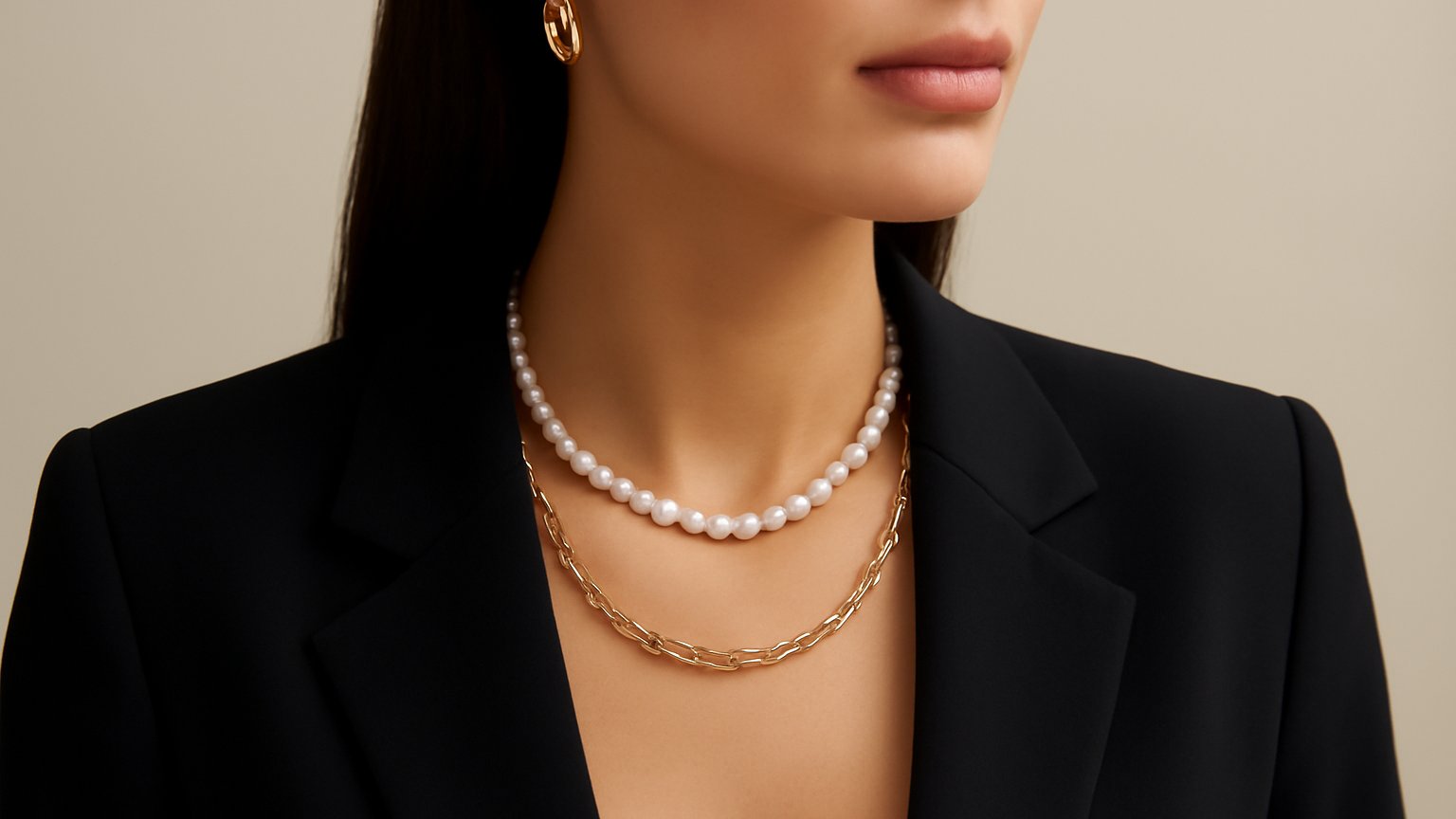
When selecting accessories for everyday items such as jeans or a simple tee, designers often recommend layering. A delicate chain layered over a thicker chain can add depth without clashing. Layering also allows for adaptability: the wearer can pull a longer chain over a jacket or swap it for a shorter pendant in a professional setting. This practice reflects the trend toward modular styling, where one accessory set serves multiple occasions. While layering offers flexibility, it can also lead to visual clutter if not curated; therefore, attention to proportion and material consistency remains essential.
For those seeking additional context on how personal style intersects with local commerce, How Local Businesses Can Boost provides insight into community‑driven fashion trends that influence jewelry choices. Integrating such local knowledge can refine selection strategies and deepen the connection between wardrobe staples and regional aesthetics.
Choosing Jewelry: A Strategic Layer to Personal Style
Across the article, evidence shows that jewelry is not merely decorative; it functions as a linguistic cue, a psychological statement, and a practical consideration. When a wearer selects a piece that aligns with their identity, the accessory becomes a mirror of self‑expression, and color‑matching research confirms that subtle hue coordination can heighten perceived confidence. Yet, the science of color also reveals that individual perception varies with lighting and cultural context, so the best practice is to test combinations in real settings before committing.
Designers have historically demonstrated that pairing bold or minimalist pieces with specific wardrobe staples can shift an outfit’s narrative. Those case studies underscore that intentional layering often outperforms random selection, though the final impact depends on body shape, occasion, and personal taste. Practical guidance for consumers—starting with a base color palette, considering material safety, and balancing statement versus subtlety—offers a roadmap that reduces common mistakes such as over‑accessorizing or selecting reactive metals.
Despite these insights, the field still lacks large‑scale longitudinal studies on how jewelry choices affect long‑term personal branding. Professionals should therefore consult a stylist or a medical specialist when in doubt. The next step for readers is to inventory their wardrobe, identify the core color themes, and experiment with one new piece each month, documenting how it shifts the overall look. Will that single change reframe the entire outfit’s story?
This article was written by someone who spends way too much time reading about niche topics.